
Few places in the world capture the romance, drama, and timeless beauty of Rome quite like the Trevi Fountain. Tucked into a bustling piazza and revealed almost suddenly as you turn a narrow street corner, this Baroque masterpiece has been mesmerizing visitors for centuries. More than just a popular photo stop, the Trevi Fountain is a living piece of history filled with legends, artistic ambition, and fascinating secrets that many travelers never fully discover.
The Ancient Roots of the Trevi Fountain
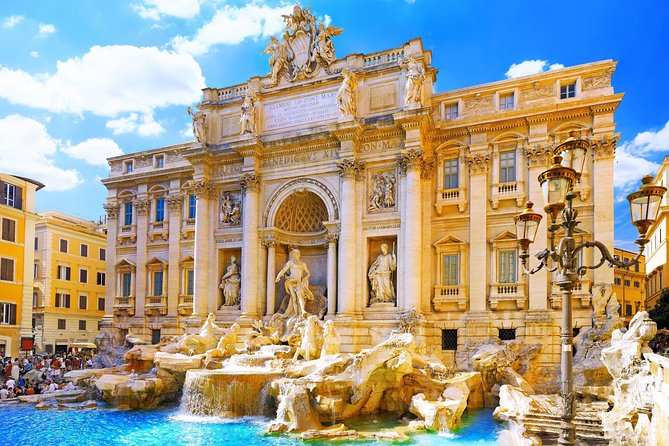
The story of the Trevi Fountain begins long before its grand marble façade existed. Its origins trace back to ancient Rome, around 19 BCE, when Emperor Augustus approved the construction of the Aqua Virgo aqueduct. This aqueduct was designed to bring fresh water from the countryside into the heart of Rome, supplying baths and fountains. Remarkably, the Aqua Virgo still functions today, making the Trevi Fountain one of the oldest continuously operating water sources in the city.
The name “Trevi” is believed to come from the Latin word trivium, meaning “three roads,” referring to the intersection where the fountain stands. While historians debate the exact origin of the name, its connection to ancient Roman infrastructure is undeniable.
A Baroque Vision Centuries in the Making
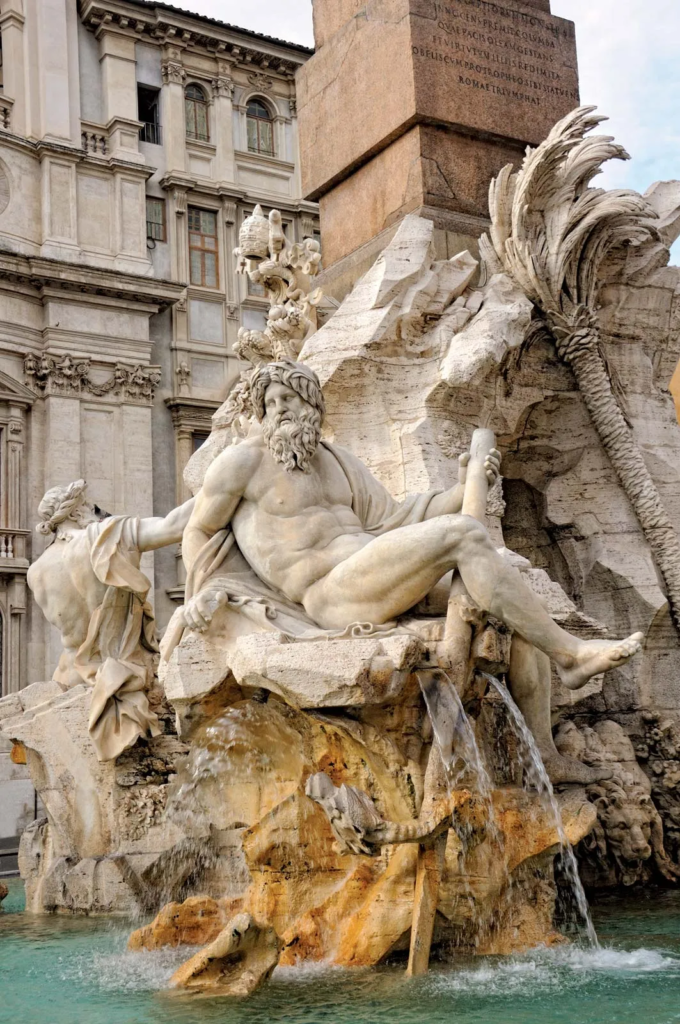
Although the aqueduct was ancient, the fountain itself took centuries to become what we see today. In the 17th century, Pope Urban VIII commissioned Gian Lorenzo Bernini to begin work on a new fountain. Bernini’s designs laid the groundwork, but political changes and funding issues halted progress.
It wasn’t until the 18th century that Pope Clement XII launched a design competition to finally complete the project. Architect Nicola Salvi won with a dramatic concept that blended architecture, sculpture, and moving water into a theatrical display. After Salvi’s death, Giuseppe Pannini completed the fountain in 1751.
The result is a towering façade attached to the Palazzo Poli, dominated by the powerful figure of Oceanus, guiding a chariot-shaped shell pulled by two horses—one calm, one wild—symbolizing the contrasting forces of water and nature.
Legends That Keep the Fountain Alive
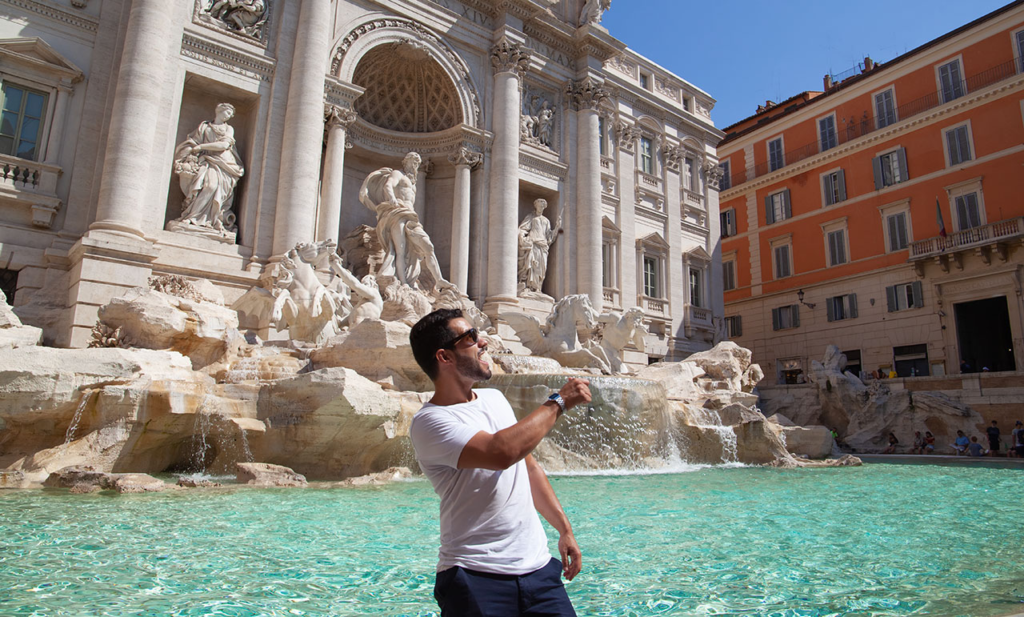
The Trevi Fountain is inseparable from its legends, especially the world-famous coin toss tradition. According to popular belief, tossing one coin over your right shoulder ensures your return to Rome. A second coin promises love, while a third supposedly leads to separation or divorce, a superstition many choose to ignore.
Each year, visitors throw an estimated one to one-and-a-half million euros into the fountain. This money is collected daily and donated to charitable causes, particularly programs that support those in need across Italy. What began as a romantic gesture has quietly become a meaningful act of generosity.
Another lesser-known legend claims that couples who drink from the fountain’s water will remain faithful forever. While modern rules prohibit drinking from the fountain, the story adds another layer of mystique to its reputation.
Hidden Details Most Visitors Miss
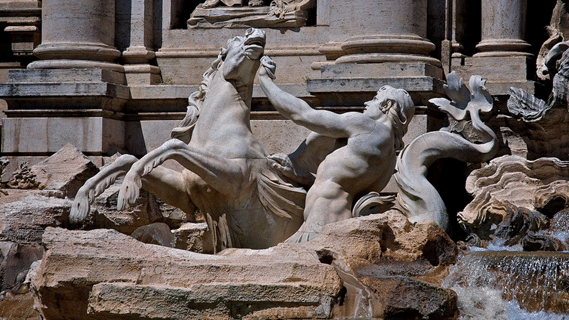
At first glance, the Trevi Fountain can feel overwhelming, but careful observation reveals subtle details. The niches surrounding Oceanus represent Abundance and Salubrity, symbols tied to prosperity and health. The rough rock formations beneath the statues are intentionally dramatic, meant to resemble natural cliffs rather than polished stone, enhancing the illusion of untamed water bursting into the city.
Many visitors also miss the inscription honoring Pope Clement XII, carved discreetly into the structure. Even the horses have personalities: one restrained, one restless, reminding viewers of humanity’s eternal struggle to control nature.
The Trevi Fountain in Modern Culture
The Trevi Fountain’s global fame exploded in the 20th century, thanks largely to cinema. Iconic scenes in films like La Dolce Vita transformed it into a symbol of desire, freedom, and indulgence. Since then, it has appeared in countless movies, commercials, and fashion campaigns, reinforcing its place as a cultural icon rather than just a historic monument.
Despite heavy tourism, careful restoration efforts ensure the fountain remains protected. Recent cleanings and conservation projects have helped preserve its marble brilliance while maintaining its structural integrity.
you might also like
- Vivo T5 5G Review: A Detailed Look at Its Features, Performance and Value

- Is SHEIN Clothing Good Quality? What You Need to Know Before Buying

- Huawei Mate XT 2 Explained: Everything You Need to Know About the New Tri-Fold

- 10 Unusual Watches at Analog:Shift You’ll Want to See in August 2026

- 15 Best Women’s Fragrances for 2026: From Affordable to Luxury Picks

Visiting the Trevi Fountain Today

The Trevi Fountain is accessible at all hours, but timing matters. Early mornings offer a quieter, more reflective experience, while evenings bring crowds and glowing lights that enhance its dramatic presence. Local etiquette asks visitors to respect the site, avoid sitting on the fountain’s edge, and follow rules designed to protect the monument.
Final Thought
The Trevi Fountain is more than marble, water, and legend. It represents Rome itself—layered with history, shaped by art, and animated by human belief. Whether you come to toss a coin, admire its craftsmanship, or simply stand in awe, the Trevi Fountain has a way of making every visitor feel part of something timeless.
Myths vs Facts About the Trevi Fountain
Myth: Throwing one coin guarantees you will return to Rome.
Fact: The tradition is symbolic and rooted in ancient Roman beliefs about travel and safe returns, not a proven promise—but many visitors return anyway.
Myth: All the coins stay in the fountain forever.
Fact: The coins are collected daily and donated to charitable organizations that support people in need across Italy.
Myth: Drinking water from the Trevi Fountain brings eternal love.
Fact: While the fountain is connected to old love legends, drinking from it is not allowed today and is discouraged to protect the monument.
Myth: The Trevi Fountain was built in ancient Roman times exactly as it stands now.
Fact: The water source is ancient, but the current Baroque fountain was completed in the 18th century.
Myth: Tossing more coins increases your luck.
Fact: The tradition officially involves one coin over the right shoulder; additional coins are personal beliefs, not historical customs.
Disclaimer: This article is for informational and travel inspiration purposes only. Historical interpretations and legends may vary among sources, and visitors should always follow local regulations when visiting cultural landmarks.
Hashtags: #TreviFountain #RomeHistory #RomeLandmarks #BaroqueArchitecture #TravelItaly #RomeTravel #HistoricPlaces #Carrerbook #Anslation